
Decathlon UK
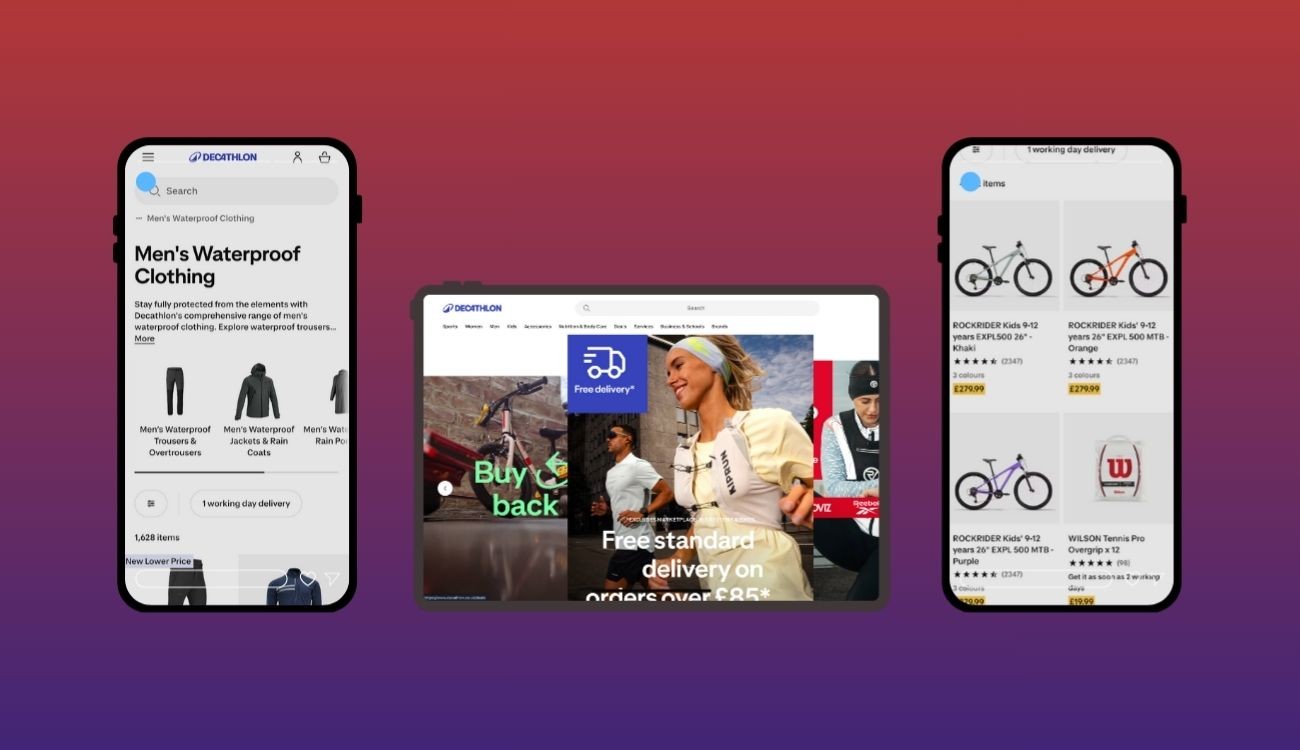
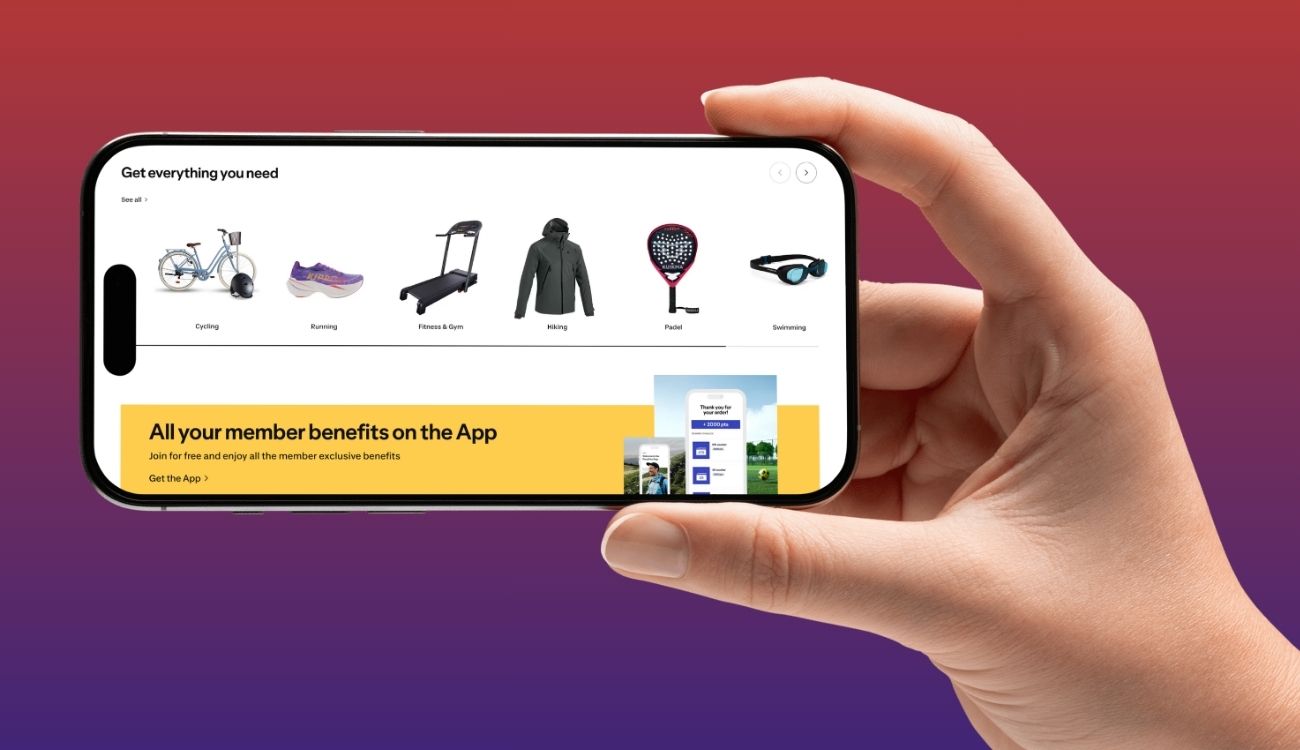
Large online store with strong UX, filtering, product information, fast checkout
Problem
Decathlon UK, a major player in sporting goods and outdoor equipment, faced several e-commerce development challenges that constrained growth during a transformative period:
Platform limitations & scalability constraints
Their legacy infrastructure wasn’t flexible enough to support large-scale experiments, promotional mechanics, or custom storefront features needed for an omnichannel retailer.
Site performance and conversion friction
With heavy catalog pages (sports, equipment, clothing) and numerous SKUs, load times and rendering bottlenecks were affecting user experience and conversion rates.Content / commerce disconnect
Product pages, guides or content pages (e.g. “How to choose running shoes”, “Cycling maintenance guides”) lacked deep integration with commerce flows and dynamic elements.Promotional and experiment agility
Decathlon UK needed infrastructure to support time-sensitive offers, tests, and modular promotions across thousands of SKUs without requiring heavy dev cycles.Integration with omnichannel and backend systems
Their platform needed seamless syncing with inventory, store pickup, buy-back/circular programs, marketplace listings, and logistics systems.
In 2023–2024, Decathlon has acknowledged that its website relaunch and digital transformation caused short-term disruption, but those investments were necessary for long-term stability. (FashionNetwork)
Solution
Digital & Designs delivered a robust e-commerce development overhaul for Decathlon UK, designed to scale, perform, and support experimentation.
1. Modular & Headless Architecture
Moved key frontend elements into modular components that can be inserted dynamically (e.g. for promotional banners, dynamic bundles, experiment frameworks).
Introduced a headless or decoupled layer (where feasible) to allow frontend agility without disrupting backend systems.
Enabled the dev and marketing teams to launch new layouts, offers, or content-driven modules with minimal friction.
2. Performance Optimization & Scalability
Implemented lazy loading, code splitting, responsive image formats (WebP, srcset), and deferred scripts on heavy catalog pages (e.g. product listing, category pages).
Enhanced caching strategies for frequently visited pages (e.g. home, top sport categories).
Introduced server-side rendering or pre-rendering for critical interactive pages to speed first meaningful paint.
3. Commerce + Content Integration
Acquired infrastructure to insert content components (guides, video snippets, reviews) into product pages dynamically — e.g. “How to choose hiking boots” sections embedded within boot product pages.
Created commerce-aware content modules that show related products, bundles, or cross-sells linked directly from content pages.
Ensured smooth transition between content → commerce paths (e.g. a viewer reading about tent types moves seamlessly to the relevant tent product page).
4. Experimentation & Promotional Engine
Built a promotion engine supporting rules-based discounts, limited-time offers, buy-one-get-one, flash sales that marketing could toggle without deep dev involvement.
Integrated A/B testing hooks in the frontend to test layouts, messaging, or display modules across SKUs, categories, or user segments.
Rolled out a framework for feature flags and staged rollouts so that new components or features could be validated before full deployment.
5. Systems & Backend Integration
Ensured tight integration with inventory, warehouse, and order management systems, so frontend promotions reflect real-time stock and avoid overselling.
Integrated omnichannel features like click & collect, store pick-up, and buy-back / recycling programs into the commerce flows.
Implemented robust tracking and attribution layers to measure conversion paths for experimentation and promotional campaigns.
Concepts
Below are the core e-commerce architecture and development concepts applied in Decathlon UK’s redesign:
Concept | Application for Decathlon UK |
Modular / Component-Driven Architecture | Enables flexible insertion of promotional or content modules without full page rebuilds. |
Headless / Decoupled Frontend | Separates frontend agility from backend dependencies, enabling faster experiments and updates. |
Performance-First Web Optimization | Lazy loading, responsive images, SSR/pre-rendering to ensure high-speed UX even with massive catalogs. |
Commerce-Content Fusion | Embedding content (guides, tutorials) within product pages or category flows with commerce calls-to-action. |
Promotion & Experiment Engine | Rule-based discounts and A/B testing capabilities that marketing can control without heavy dev cycles. |
Omnichannel Integration | Seamless flow among online and in-store systems (inventory, pickup, buy-back) to provide consistent experience. |
More Works
FAQ
01
What budget should we start with?
02
Do you produce creatives?
03
Can you work with our influencer program?
03
How soon to results?

Decathlon UK
Large online store with strong UX, filtering, product information, fast checkout
Problem
Decathlon UK, a major player in sporting goods and outdoor equipment, faced several e-commerce development challenges that constrained growth during a transformative period:
Platform limitations & scalability constraints
Their legacy infrastructure wasn’t flexible enough to support large-scale experiments, promotional mechanics, or custom storefront features needed for an omnichannel retailer.
Site performance and conversion friction
With heavy catalog pages (sports, equipment, clothing) and numerous SKUs, load times and rendering bottlenecks were affecting user experience and conversion rates.Content / commerce disconnect
Product pages, guides or content pages (e.g. “How to choose running shoes”, “Cycling maintenance guides”) lacked deep integration with commerce flows and dynamic elements.Promotional and experiment agility
Decathlon UK needed infrastructure to support time-sensitive offers, tests, and modular promotions across thousands of SKUs without requiring heavy dev cycles.Integration with omnichannel and backend systems
Their platform needed seamless syncing with inventory, store pickup, buy-back/circular programs, marketplace listings, and logistics systems.
In 2023–2024, Decathlon has acknowledged that its website relaunch and digital transformation caused short-term disruption, but those investments were necessary for long-term stability. (FashionNetwork)
Solution
Digital & Designs delivered a robust e-commerce development overhaul for Decathlon UK, designed to scale, perform, and support experimentation.
1. Modular & Headless Architecture
Moved key frontend elements into modular components that can be inserted dynamically (e.g. for promotional banners, dynamic bundles, experiment frameworks).
Introduced a headless or decoupled layer (where feasible) to allow frontend agility without disrupting backend systems.
Enabled the dev and marketing teams to launch new layouts, offers, or content-driven modules with minimal friction.
2. Performance Optimization & Scalability
Implemented lazy loading, code splitting, responsive image formats (WebP, srcset), and deferred scripts on heavy catalog pages (e.g. product listing, category pages).
Enhanced caching strategies for frequently visited pages (e.g. home, top sport categories).
Introduced server-side rendering or pre-rendering for critical interactive pages to speed first meaningful paint.
3. Commerce + Content Integration
Acquired infrastructure to insert content components (guides, video snippets, reviews) into product pages dynamically — e.g. “How to choose hiking boots” sections embedded within boot product pages.
Created commerce-aware content modules that show related products, bundles, or cross-sells linked directly from content pages.
Ensured smooth transition between content → commerce paths (e.g. a viewer reading about tent types moves seamlessly to the relevant tent product page).
4. Experimentation & Promotional Engine
Built a promotion engine supporting rules-based discounts, limited-time offers, buy-one-get-one, flash sales that marketing could toggle without deep dev involvement.
Integrated A/B testing hooks in the frontend to test layouts, messaging, or display modules across SKUs, categories, or user segments.
Rolled out a framework for feature flags and staged rollouts so that new components or features could be validated before full deployment.
5. Systems & Backend Integration
Ensured tight integration with inventory, warehouse, and order management systems, so frontend promotions reflect real-time stock and avoid overselling.
Integrated omnichannel features like click & collect, store pick-up, and buy-back / recycling programs into the commerce flows.
Implemented robust tracking and attribution layers to measure conversion paths for experimentation and promotional campaigns.
Concepts
Below are the core e-commerce architecture and development concepts applied in Decathlon UK’s redesign:
Concept | Application for Decathlon UK |
Modular / Component-Driven Architecture | Enables flexible insertion of promotional or content modules without full page rebuilds. |
Headless / Decoupled Frontend | Separates frontend agility from backend dependencies, enabling faster experiments and updates. |
Performance-First Web Optimization | Lazy loading, responsive images, SSR/pre-rendering to ensure high-speed UX even with massive catalogs. |
Commerce-Content Fusion | Embedding content (guides, tutorials) within product pages or category flows with commerce calls-to-action. |
Promotion & Experiment Engine | Rule-based discounts and A/B testing capabilities that marketing can control without heavy dev cycles. |
Omnichannel Integration | Seamless flow among online and in-store systems (inventory, pickup, buy-back) to provide consistent experience. |
More Works
FAQ
01
What budget should we start with?
02
Do you produce creatives?
03
Can you work with our influencer program?
03
How soon to results?
Decathlon UK
Large online store with strong UX, filtering, product information, fast checkout
Problem
Decathlon UK, a major player in sporting goods and outdoor equipment, faced several e-commerce development challenges that constrained growth during a transformative period:
Platform limitations & scalability constraints
Their legacy infrastructure wasn’t flexible enough to support large-scale experiments, promotional mechanics, or custom storefront features needed for an omnichannel retailer.
Site performance and conversion friction
With heavy catalog pages (sports, equipment, clothing) and numerous SKUs, load times and rendering bottlenecks were affecting user experience and conversion rates.Content / commerce disconnect
Product pages, guides or content pages (e.g. “How to choose running shoes”, “Cycling maintenance guides”) lacked deep integration with commerce flows and dynamic elements.Promotional and experiment agility
Decathlon UK needed infrastructure to support time-sensitive offers, tests, and modular promotions across thousands of SKUs without requiring heavy dev cycles.Integration with omnichannel and backend systems
Their platform needed seamless syncing with inventory, store pickup, buy-back/circular programs, marketplace listings, and logistics systems.
In 2023–2024, Decathlon has acknowledged that its website relaunch and digital transformation caused short-term disruption, but those investments were necessary for long-term stability. (FashionNetwork)
Solution
Digital & Designs delivered a robust e-commerce development overhaul for Decathlon UK, designed to scale, perform, and support experimentation.
1. Modular & Headless Architecture
Moved key frontend elements into modular components that can be inserted dynamically (e.g. for promotional banners, dynamic bundles, experiment frameworks).
Introduced a headless or decoupled layer (where feasible) to allow frontend agility without disrupting backend systems.
Enabled the dev and marketing teams to launch new layouts, offers, or content-driven modules with minimal friction.
2. Performance Optimization & Scalability
Implemented lazy loading, code splitting, responsive image formats (WebP, srcset), and deferred scripts on heavy catalog pages (e.g. product listing, category pages).
Enhanced caching strategies for frequently visited pages (e.g. home, top sport categories).
Introduced server-side rendering or pre-rendering for critical interactive pages to speed first meaningful paint.
3. Commerce + Content Integration
Acquired infrastructure to insert content components (guides, video snippets, reviews) into product pages dynamically — e.g. “How to choose hiking boots” sections embedded within boot product pages.
Created commerce-aware content modules that show related products, bundles, or cross-sells linked directly from content pages.
Ensured smooth transition between content → commerce paths (e.g. a viewer reading about tent types moves seamlessly to the relevant tent product page).
4. Experimentation & Promotional Engine
Built a promotion engine supporting rules-based discounts, limited-time offers, buy-one-get-one, flash sales that marketing could toggle without deep dev involvement.
Integrated A/B testing hooks in the frontend to test layouts, messaging, or display modules across SKUs, categories, or user segments.
Rolled out a framework for feature flags and staged rollouts so that new components or features could be validated before full deployment.
5. Systems & Backend Integration
Ensured tight integration with inventory, warehouse, and order management systems, so frontend promotions reflect real-time stock and avoid overselling.
Integrated omnichannel features like click & collect, store pick-up, and buy-back / recycling programs into the commerce flows.
Implemented robust tracking and attribution layers to measure conversion paths for experimentation and promotional campaigns.
Concepts
Below are the core e-commerce architecture and development concepts applied in Decathlon UK’s redesign:
Concept | Application for Decathlon UK |
Modular / Component-Driven Architecture | Enables flexible insertion of promotional or content modules without full page rebuilds. |
Headless / Decoupled Frontend | Separates frontend agility from backend dependencies, enabling faster experiments and updates. |
Performance-First Web Optimization | Lazy loading, responsive images, SSR/pre-rendering to ensure high-speed UX even with massive catalogs. |
Commerce-Content Fusion | Embedding content (guides, tutorials) within product pages or category flows with commerce calls-to-action. |
Promotion & Experiment Engine | Rule-based discounts and A/B testing capabilities that marketing can control without heavy dev cycles. |
Omnichannel Integration | Seamless flow among online and in-store systems (inventory, pickup, buy-back) to provide consistent experience. |
More Works
FAQ
What budget should we start with?
Do you produce creatives?
Can you work with our influencer program?
How soon to results?